
Raising $5M for a next-gen football AI assistant
Analysts spend hours reviewing footage, limiting time for strategy. I collaborated with the team across three phases—building the MVP and adding two additional features—delivering an AI tool that automated tactical analysis and freed analysts to focus on higher-impact work. Over time, the vision expanded to real-time tactical suggestions, player tracking, injury prediction, and scouting, positioning it as a full-spectrum AI assistant for football teams.


Turning game footage into actionable insights
I partnered with a cross-disciplinary founding team—spanning PhDs in cognitive science, professional football, and business—to build the first MVP of an AI-powered web tool that automatically detects and classifies football tactics in games and training sessions.
Fresh off a Series A raise and aiming to launch within a 12-month window, the team needed strategic product direction.
Building the MVP in three strategic phases

Discovery
Identify pain points, use patterns, and align the product with real user needs.
1Ideation
Define the product structure, map key jobs-to-be-done, and outline user journeys.
2
Creation
Design the full experience, apply branding, build the design system, and cover edge cases.
3Stakeholders interviews – Phase 1
De-risking reliability
We conducted interviews with key stakeholders to gather critical input for the design process, uncovering constraints, success metrics, and business goals. Our objectives were to understand the project domain—including users, context, and decision-making factors—align stakeholder expectations with product constraints, identify core challenges in football performance, analyze competitors and their weaknesses, and define clear metrics for measuring success and failure.
Shadowing and user interviews – Phase 2
Uncovering analyst needs
We collaborated with two top-tier European football teams, observing match and training workflows firsthand. Through interviews with analysts, we explored their toolsets and day-to-day processes—uncovering usage patterns, pain points, and key opportunities to inform product direction.
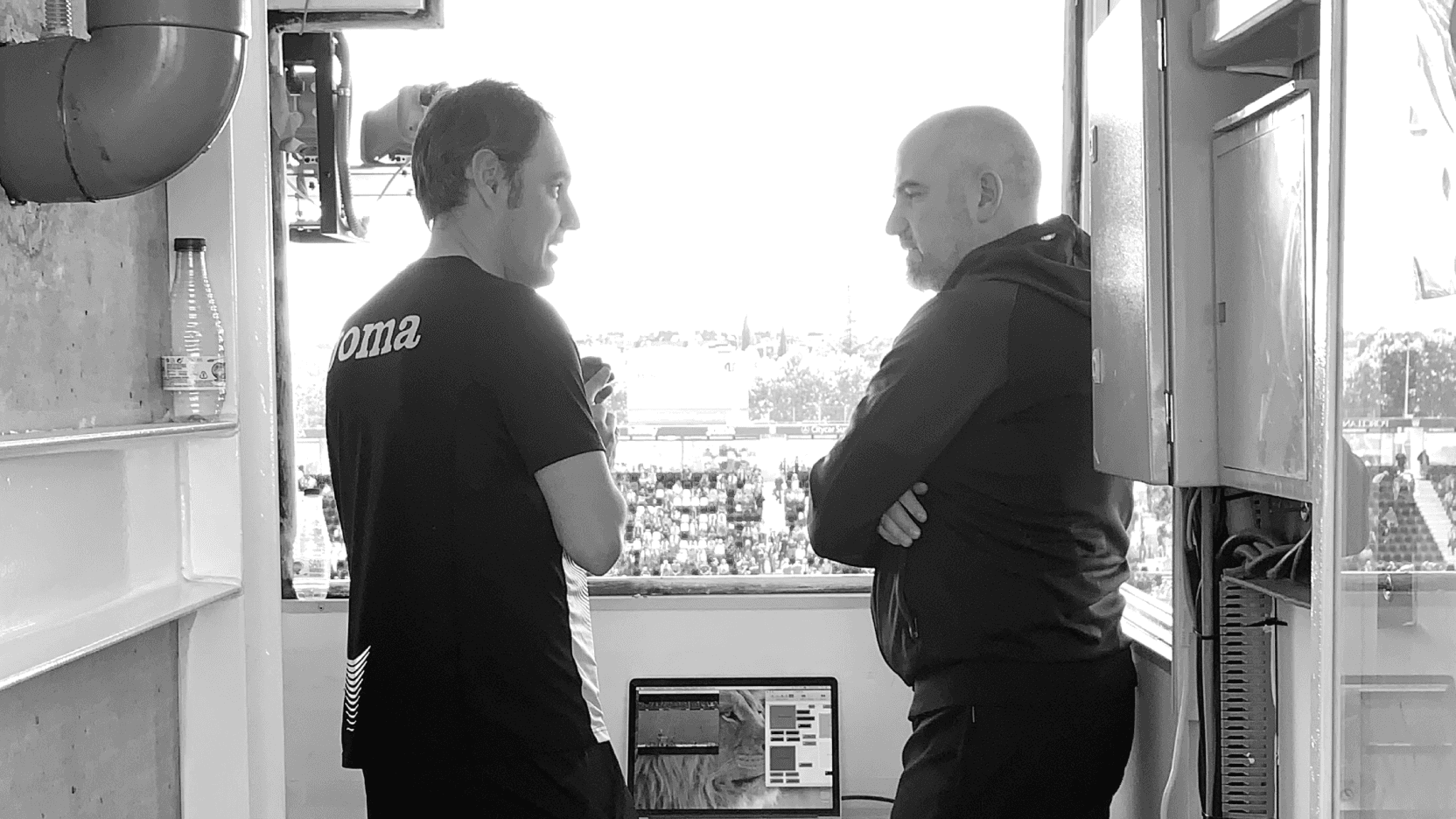
Game day
Tasks:
- Real-time manual tagging of the plays
- Create report of the main insights (individual and collective)
- Share report with players
- Communicate most important plays during half time to the team
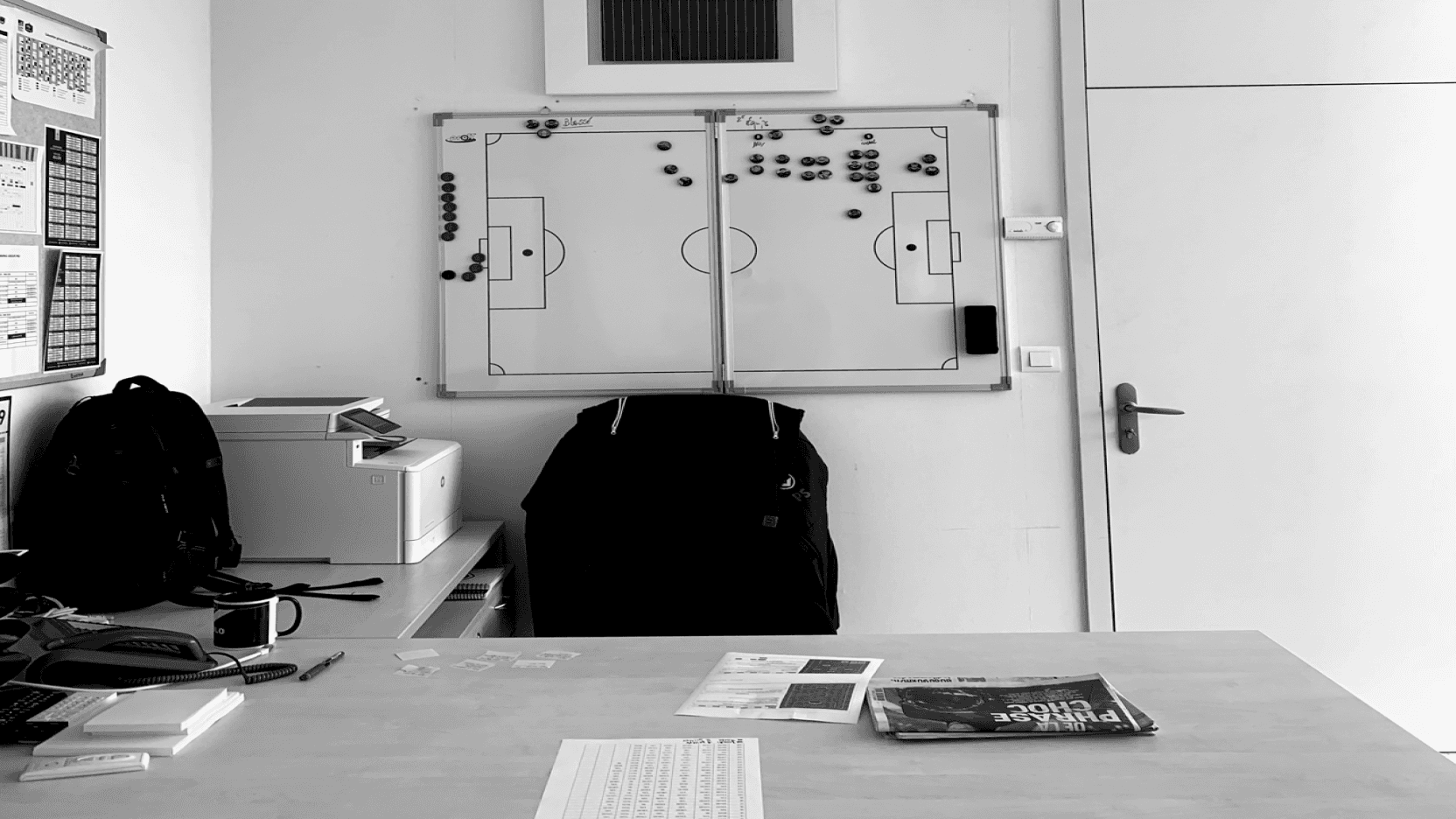
Post-match
Tasks:
- Post-match manual tagging of the plays
- Analyze the next opponent by tagging past games
- Create a report with conclusions and drill suggestions to work on
- Coach decides what to train during the week
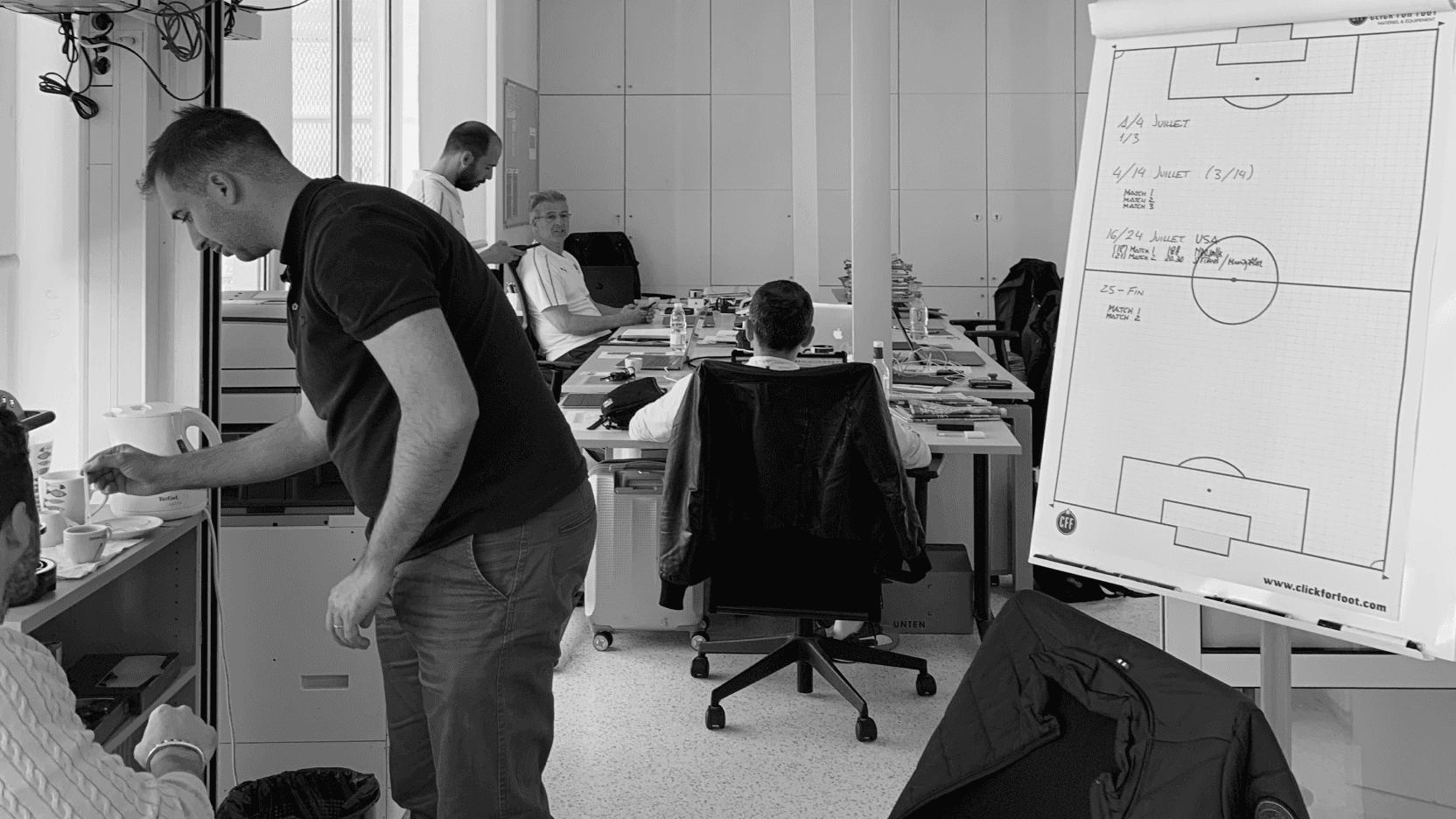
Rest of the week
Tasks:
- Record trainings for tagging analysis
- Execute drills with the team
- Share videos and tactics with players (via whatsapp usually)
- Supervise trainings
Analysts needed tools to automatically clip videos, add visual annotations, and manage a database of player profiles. Kognia's vision went a step further—they aimed to offer live game insights, but first needed to earn trust by saving teams time.
The football industry's missing piece

Competitive analysis – Phase 3
Turning a limited market into a clear opportunity
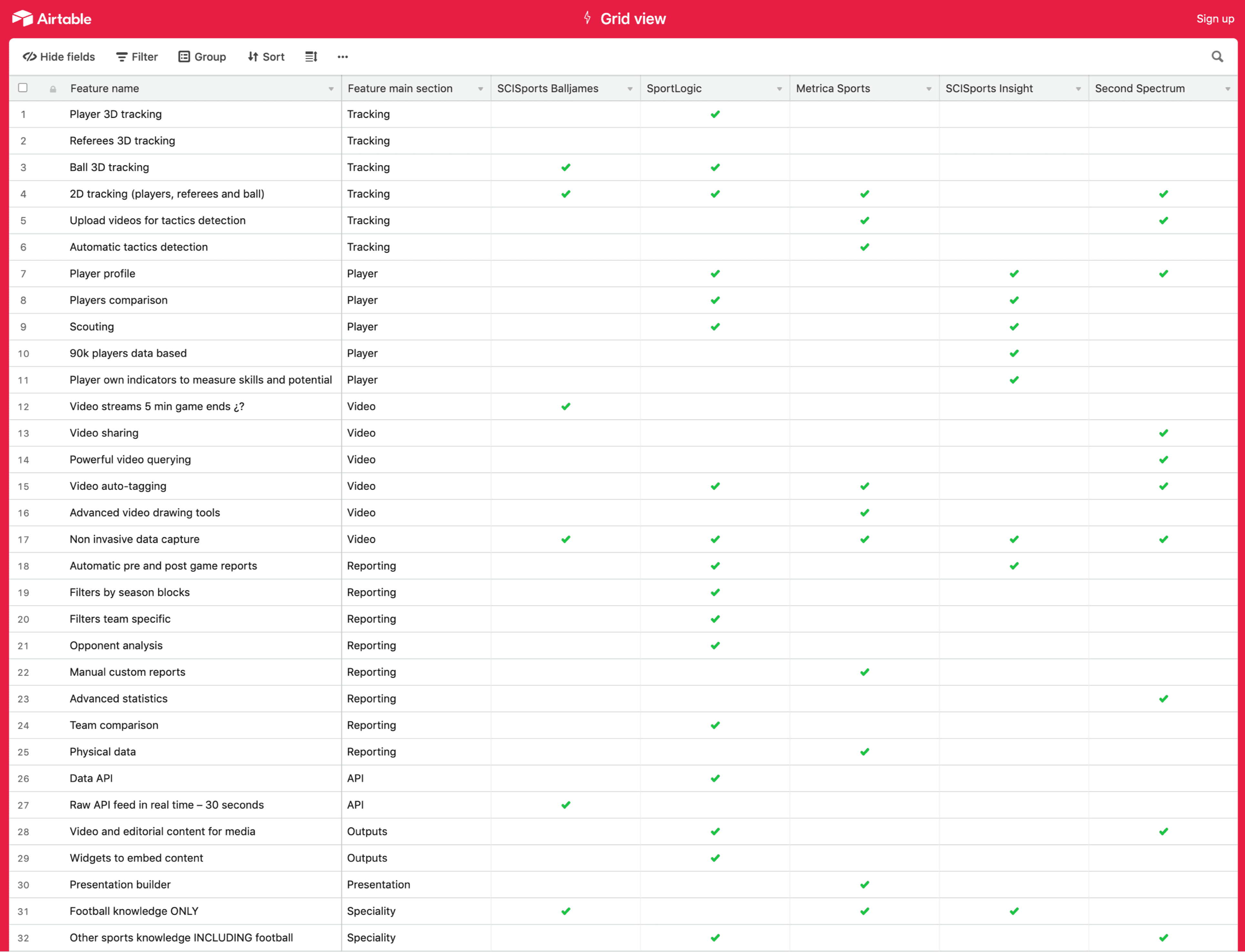
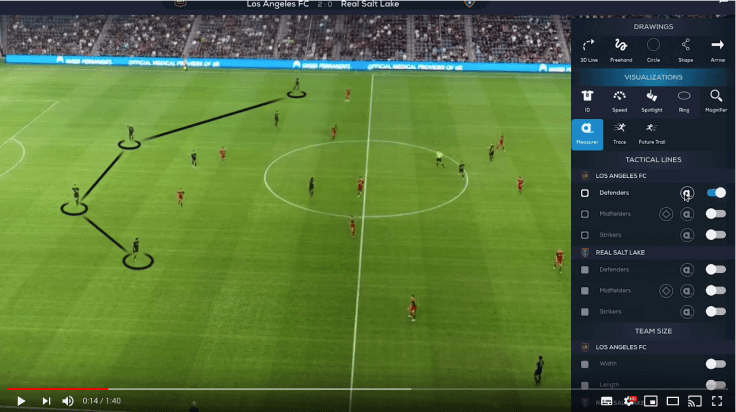
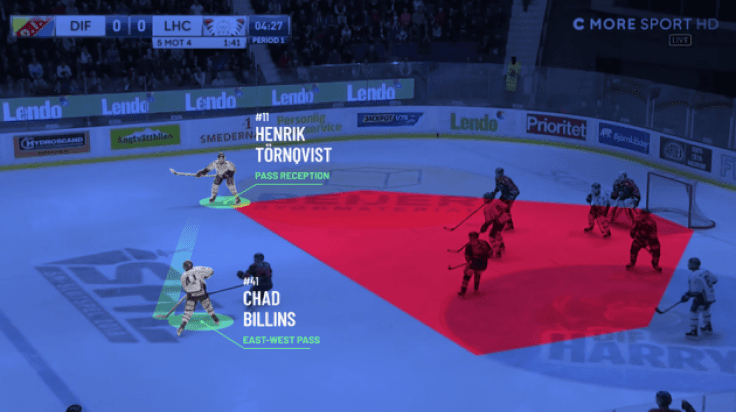
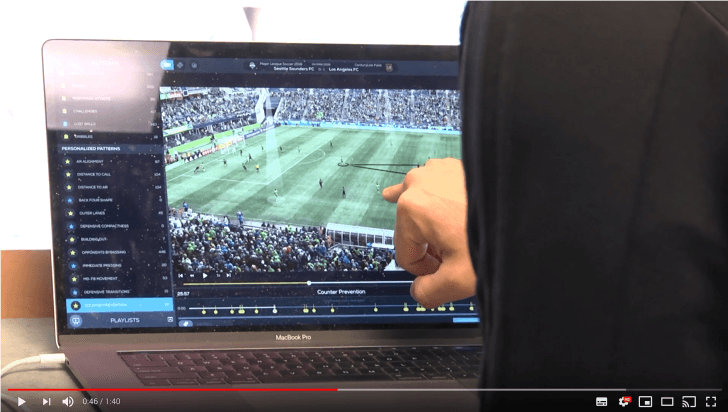
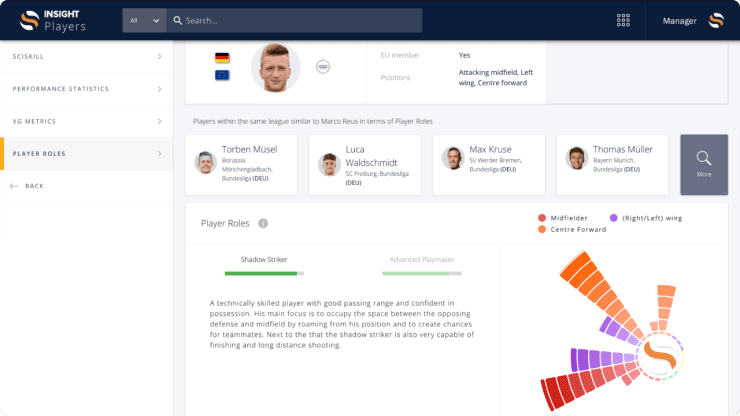
We conducted a market review to map competitor features and product architecture, analyze business models and pricing strategies, and evaluate visual design—defining clear opportunities for Kognia's differentiation in UX, branding, and overall strategy.
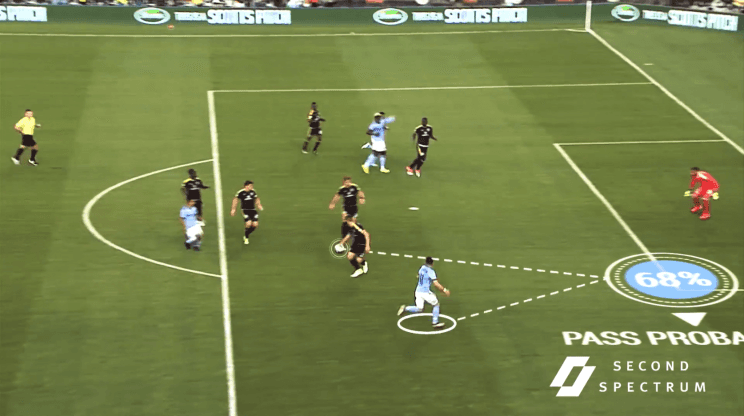
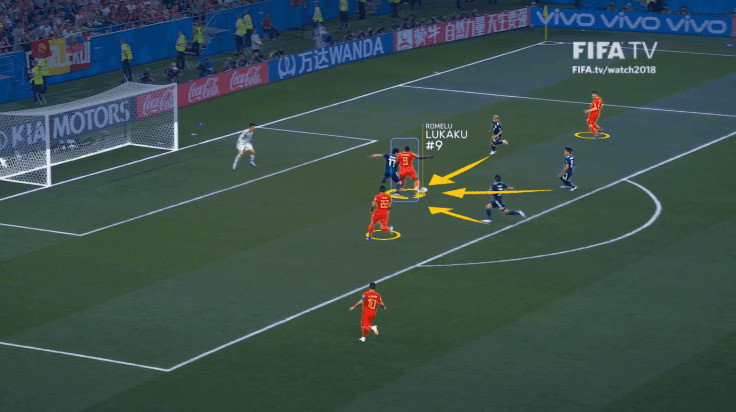
Competition was limited—only one major player offered a similar solution, but lacked AI-driven analysis and mathematical modeling, leaving a clear opportunity for Kognia to lead with deeper tactical insights.
Ideation and creation – Phase 4
From vision to delivery
I led UX strategy and solution ideation—running feature definition workshops with stakeholders and engineers, shaping the MVP roadmap, facilitating ideation sessions, designing the end-to-end user experience, documenting key decisions, and ensuring successful delivery.
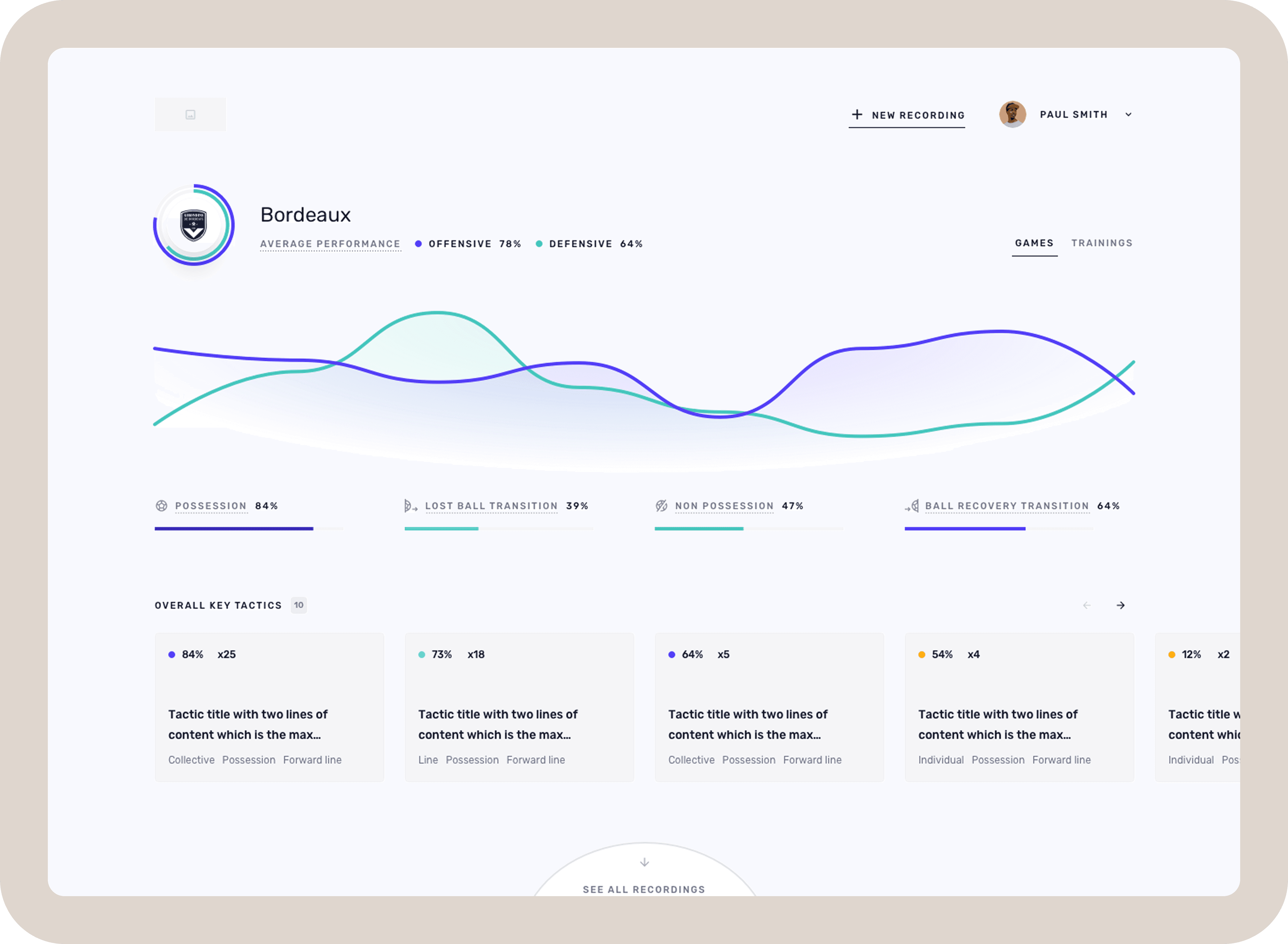
A performance report that helps analysts track team progress over time. Users can filter by games or training sessions and view data organized around the four key moments of play—offense, defense, and transitions. The report also highlights the most frequently detected tactics for quick insights.
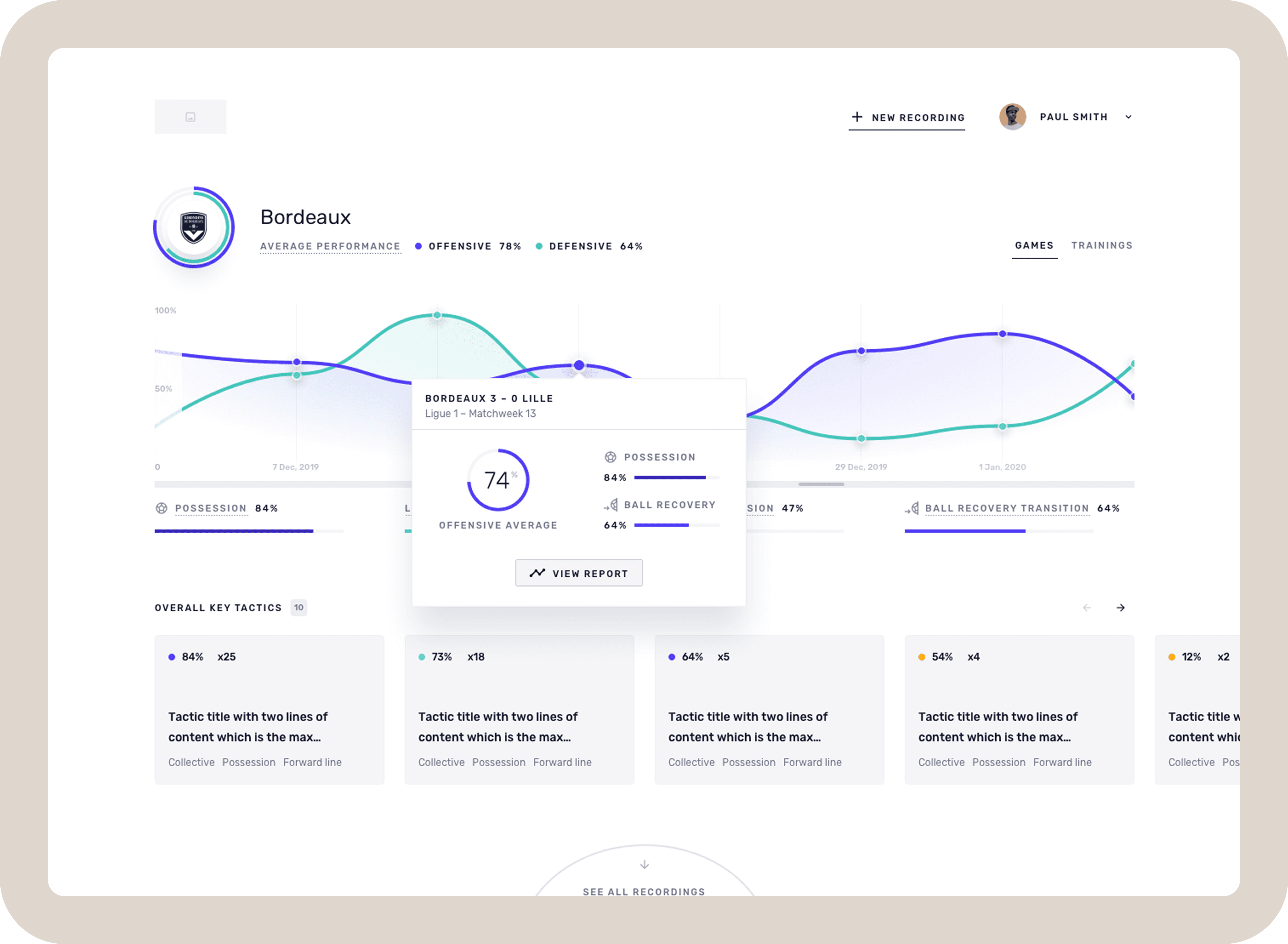
On hover, analysts and coaches can quickly access high-level data from a specific game or training session.
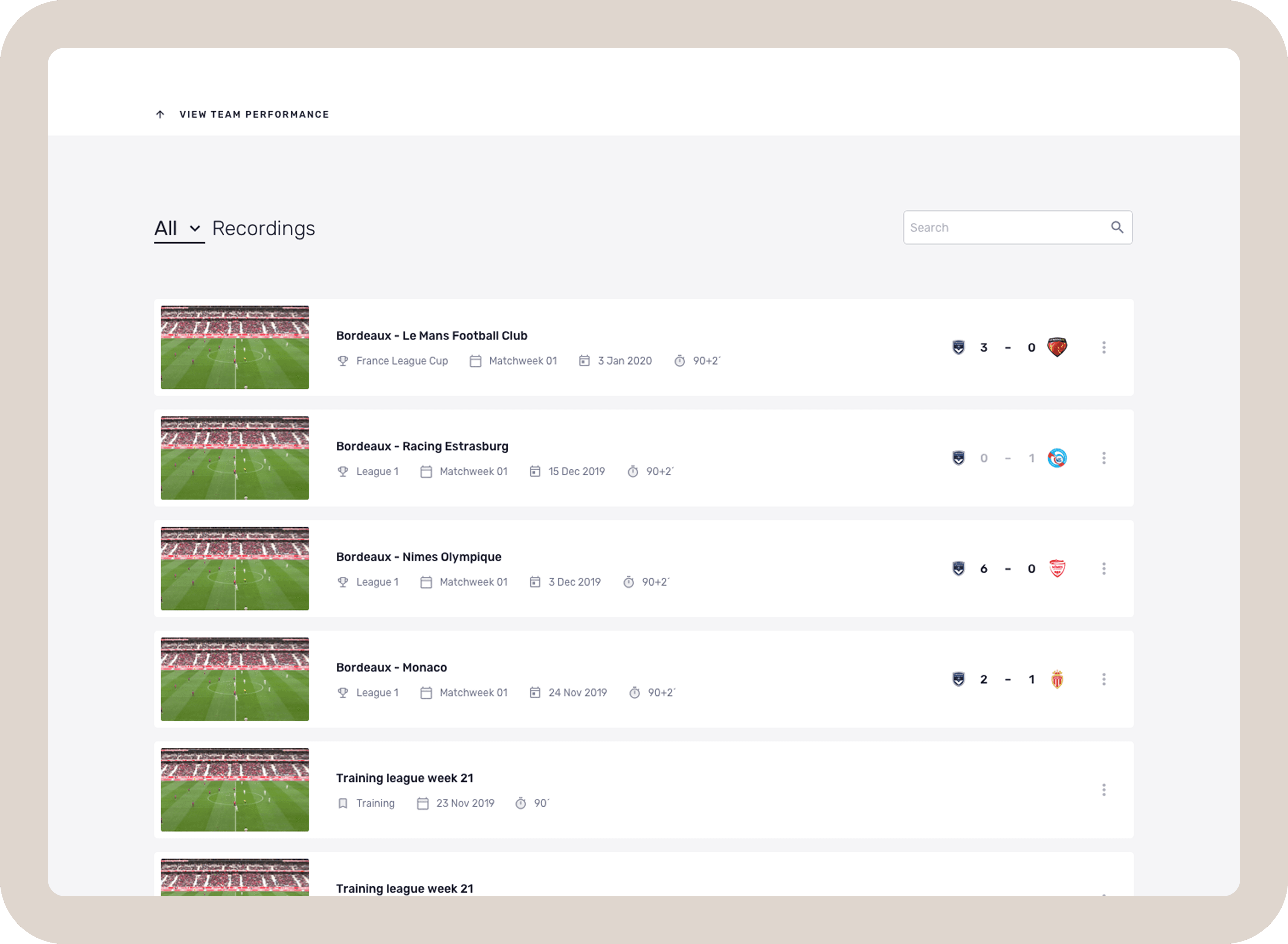
Beneath the performance report, users can quickly access a searchable list of recent games and training sessions.
Hover effect on a specific game or training item.
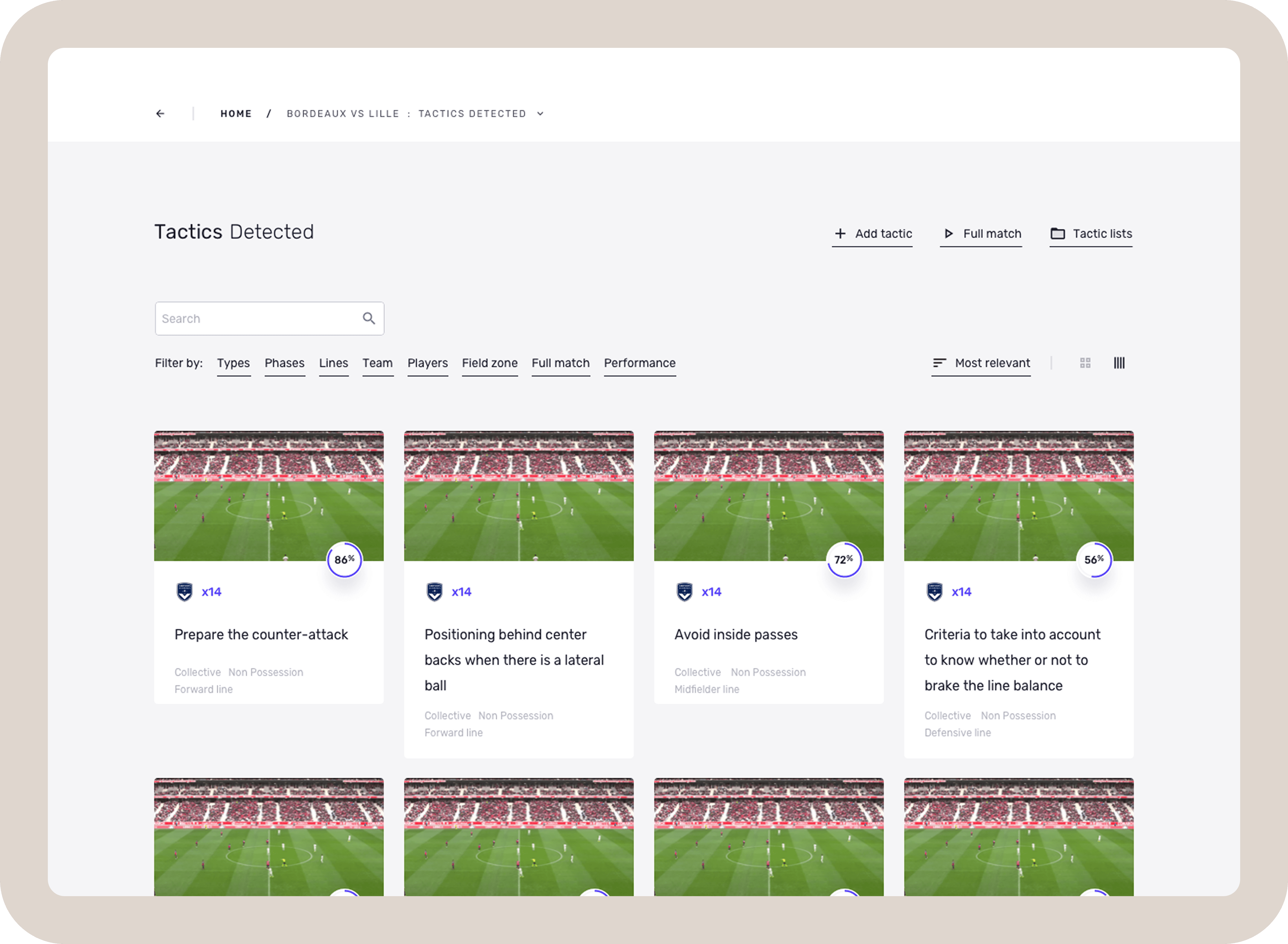
Within each game or training session, analysts can review a list of detected tactics paired with short video clips of when they occurred. The list is organized by relevance, adapting to the team's objectives—whether defense-focused or offense-driven.
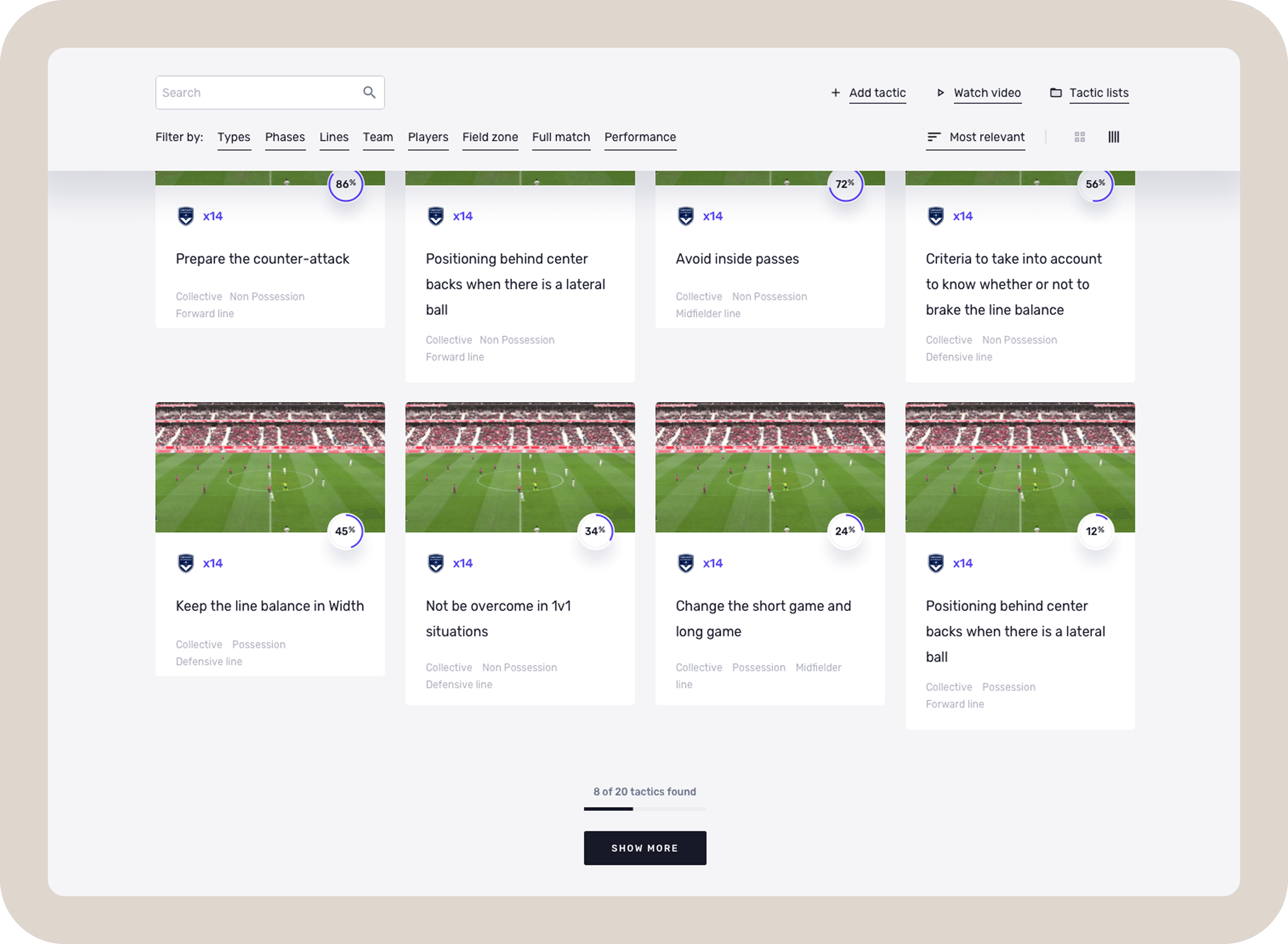
Results can be filtered in multiple ways, giving analysts maximum flexibility in their analysis.
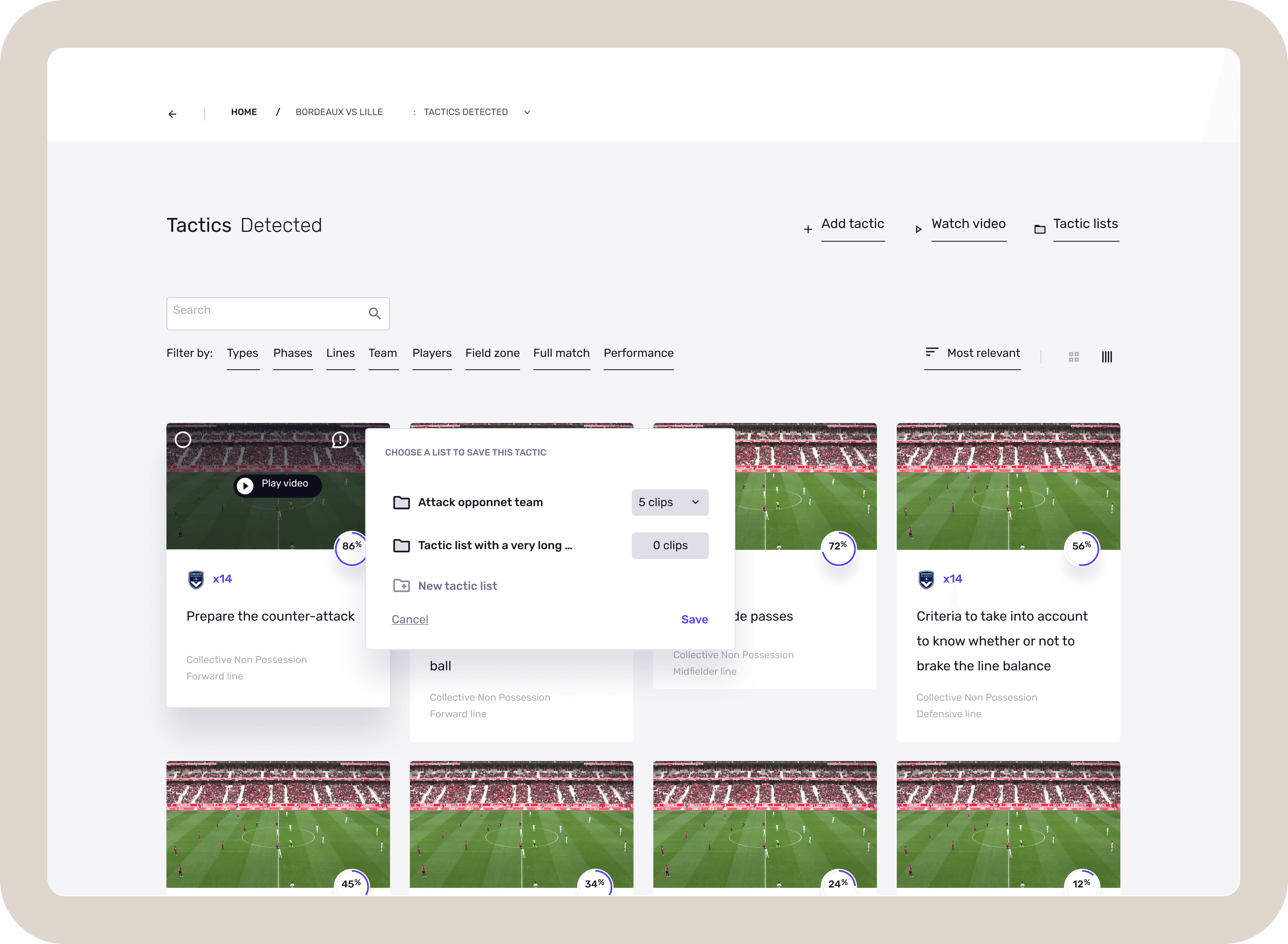
Since analysts often organize clips for different purposes, we introduced the concept of 'saved lists.' These allow them to group specific clips by goal—whether for player feedback, a visual report for the coach, or other needs.
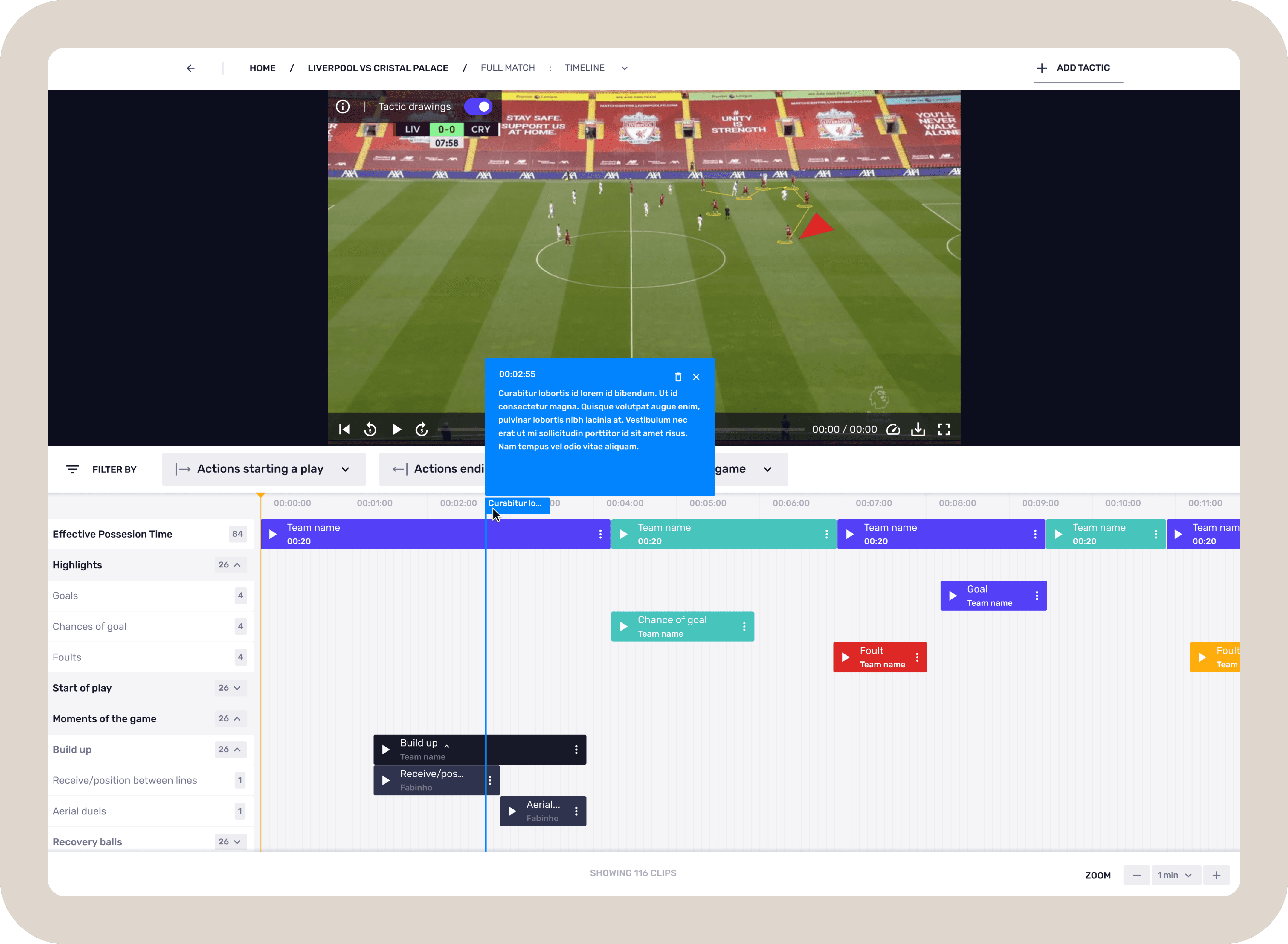
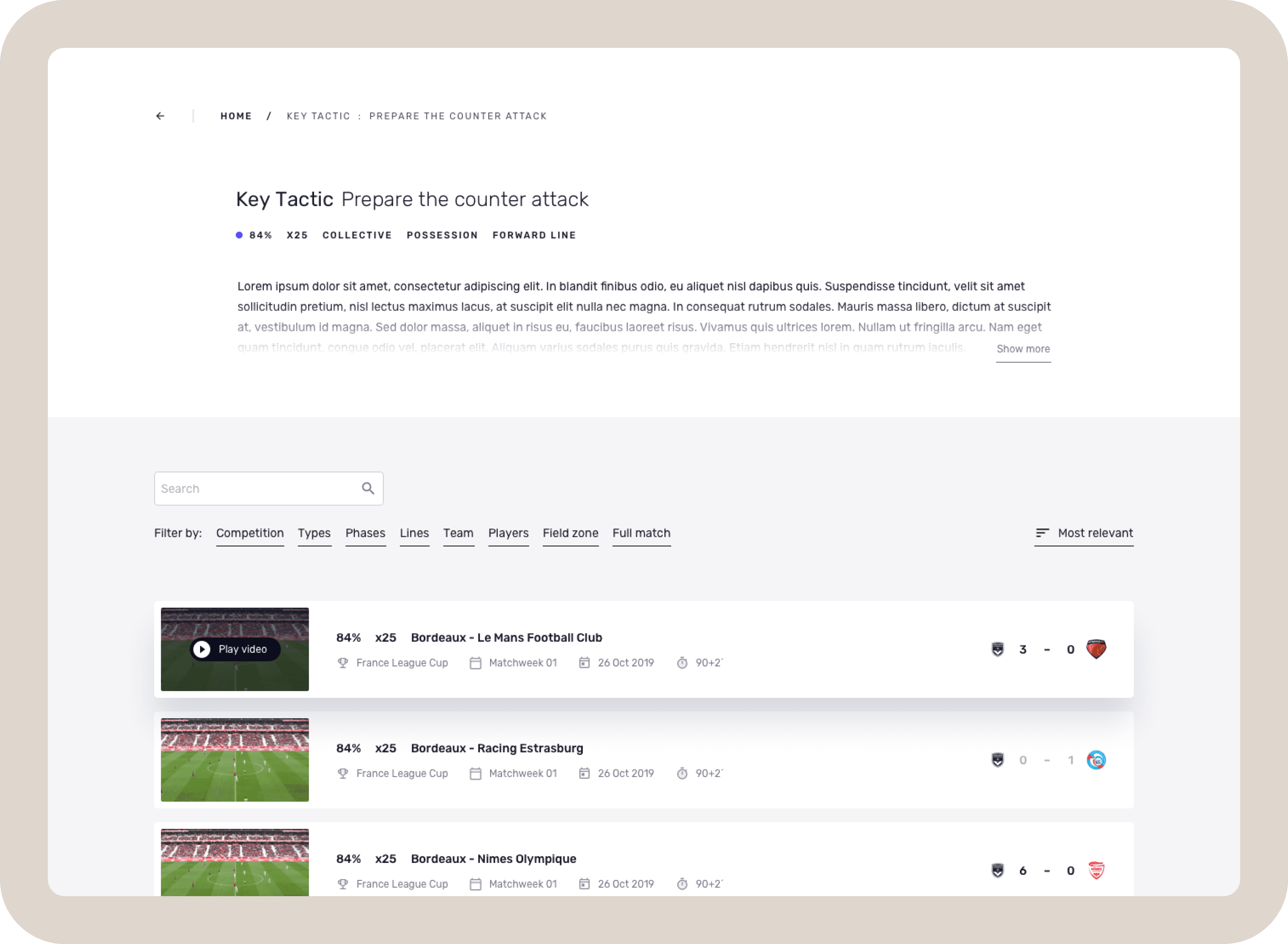
This is how a game or training session appears within the video details view. Although not part of Kognia's initial vision, research revealed that earning analyst trust was essential—and the best way to achieve it was by providing the source of truth behind every detected tactic. Another key reason for introducing this feature was to reduce the learning curve, making the new product feel more familiar compared to the tools analysts were already using.
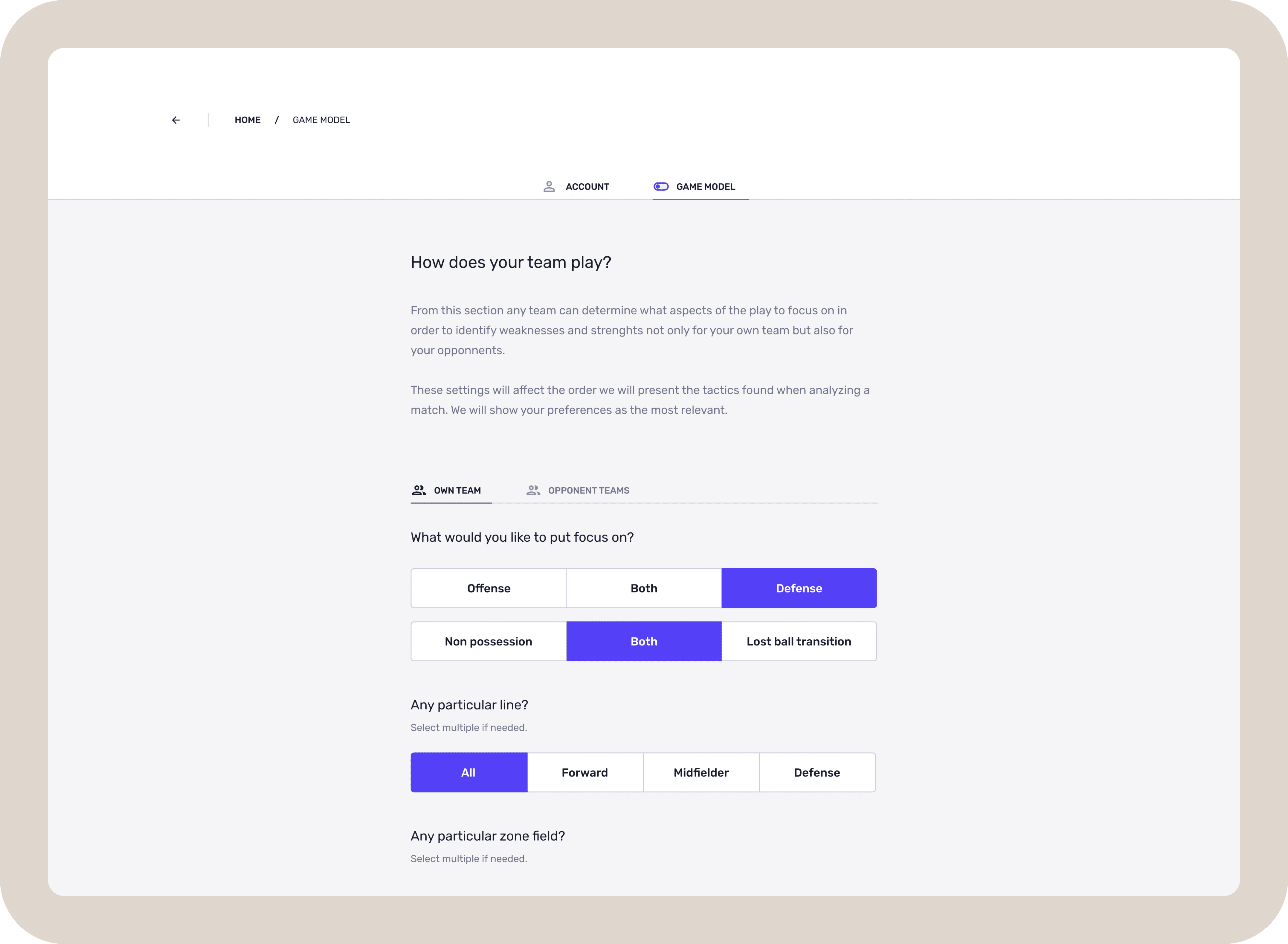
Another important element allowed the team to set their vision and goals, which would then adapt how the data was displayed.
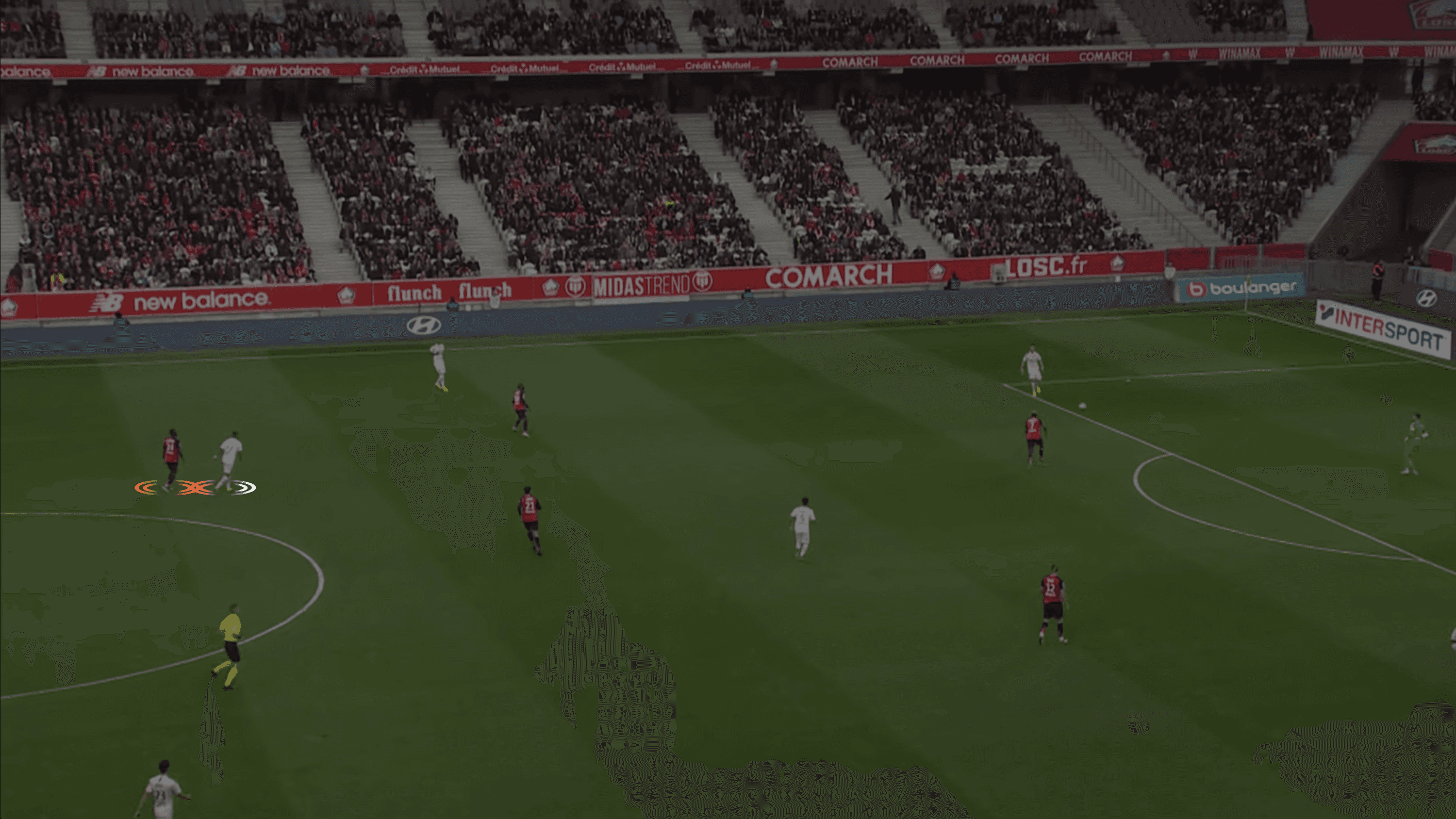
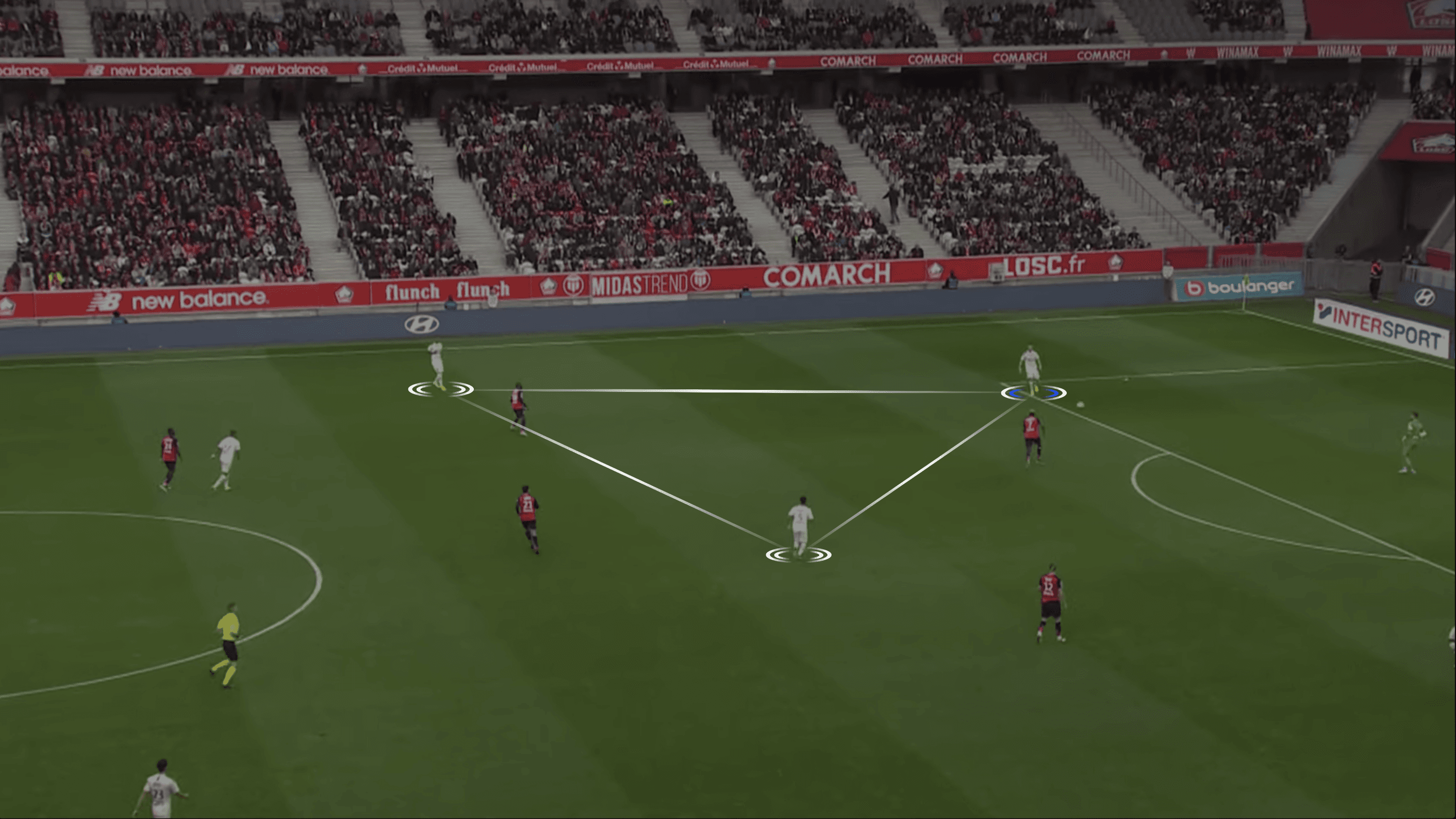
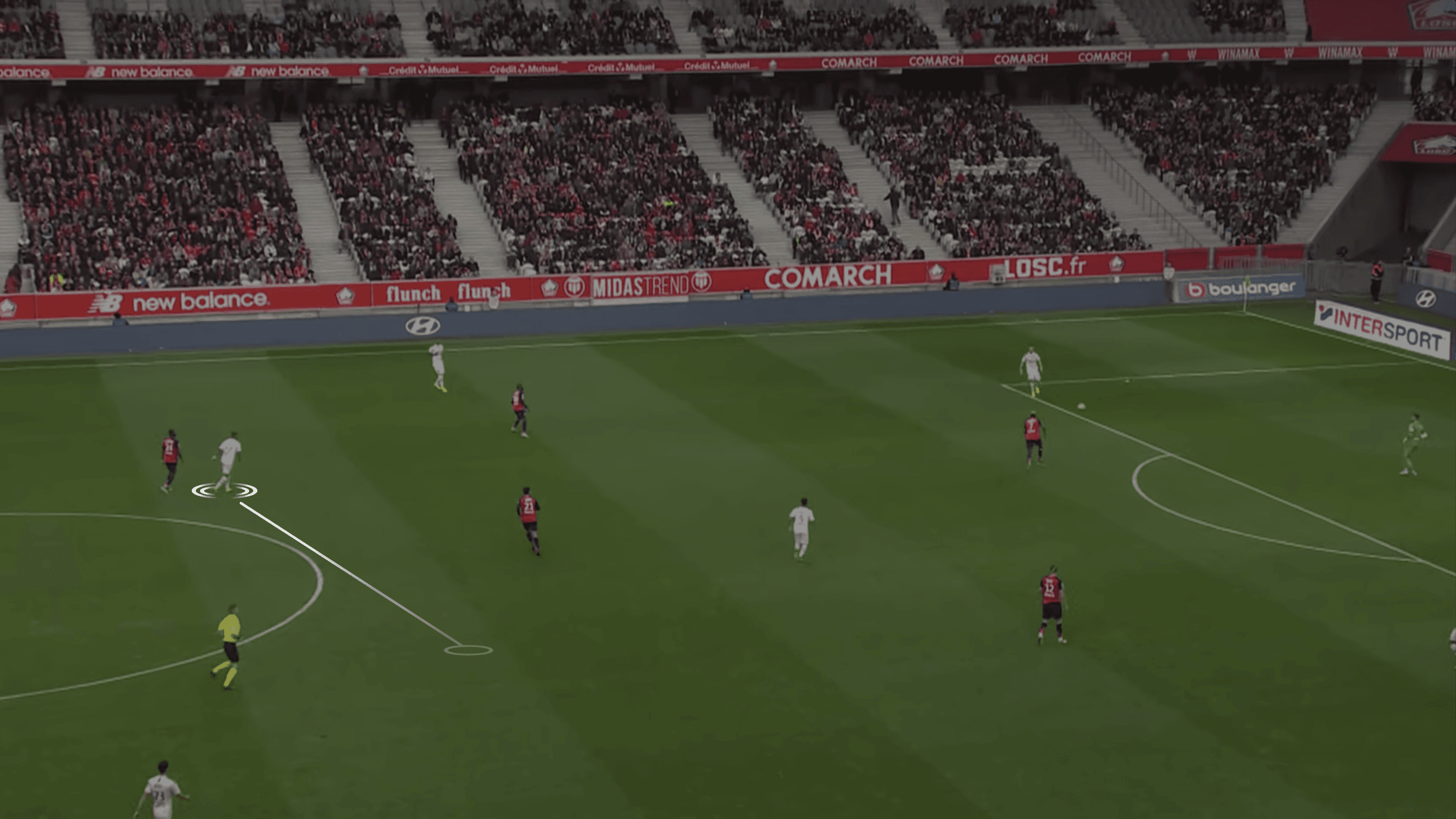
We also developed a comprehensive gallery of drawings to automatically identify common game moments, testing them with other analysts to ensure they were clear and easily understood.
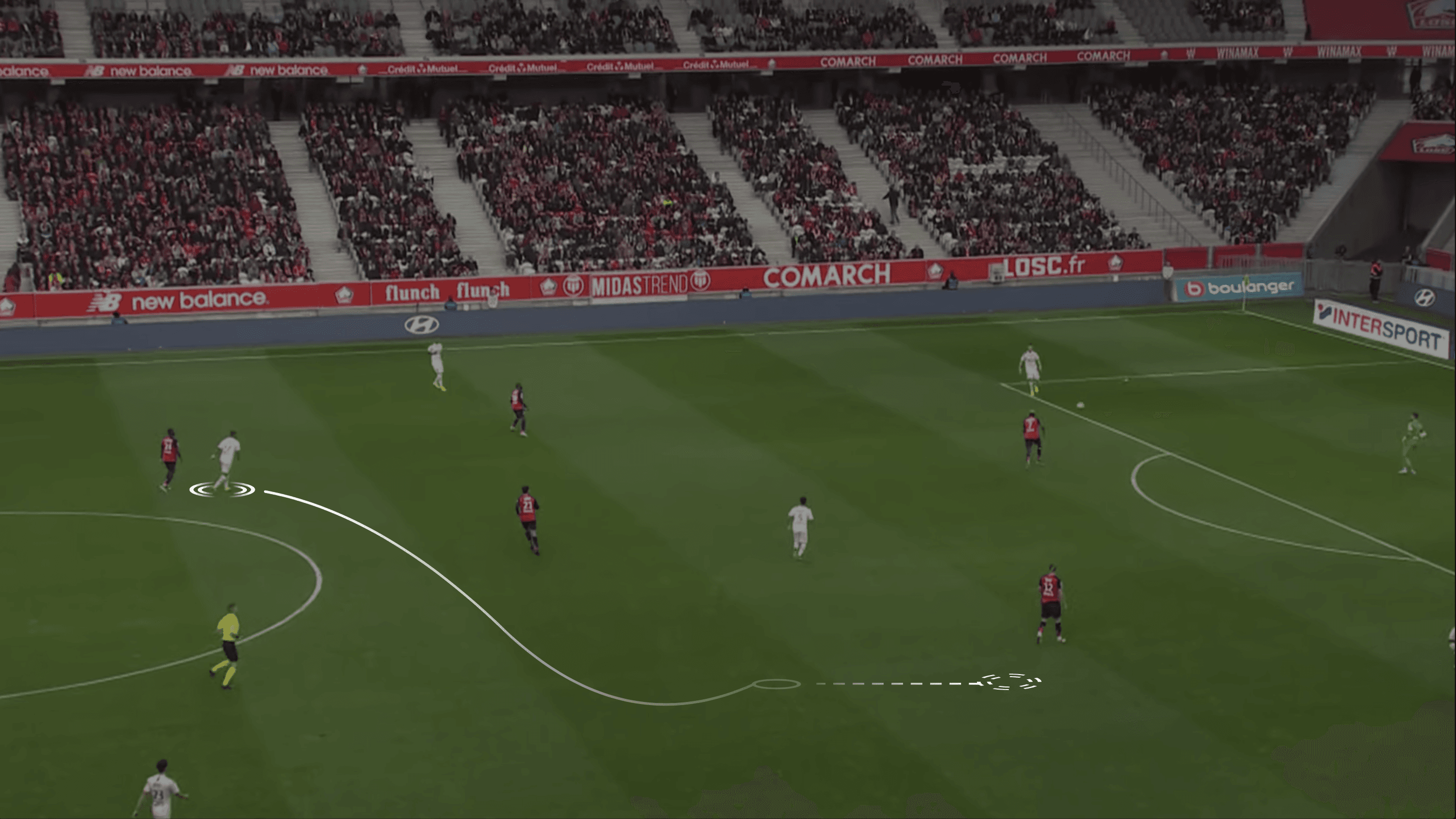
High pression between players
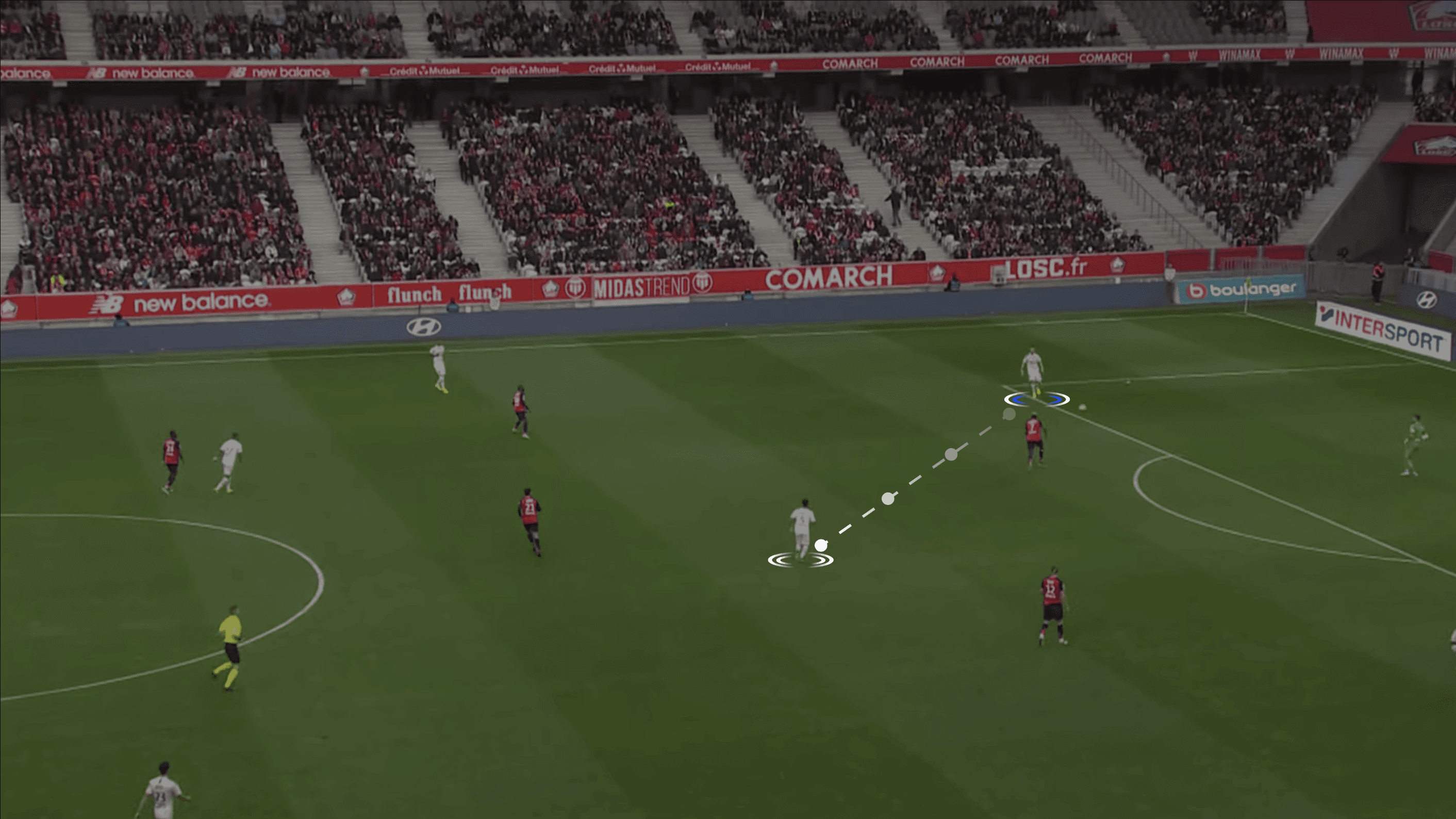
Ground pass
Relationship between players
Player movement vs suggested
Player movement straight
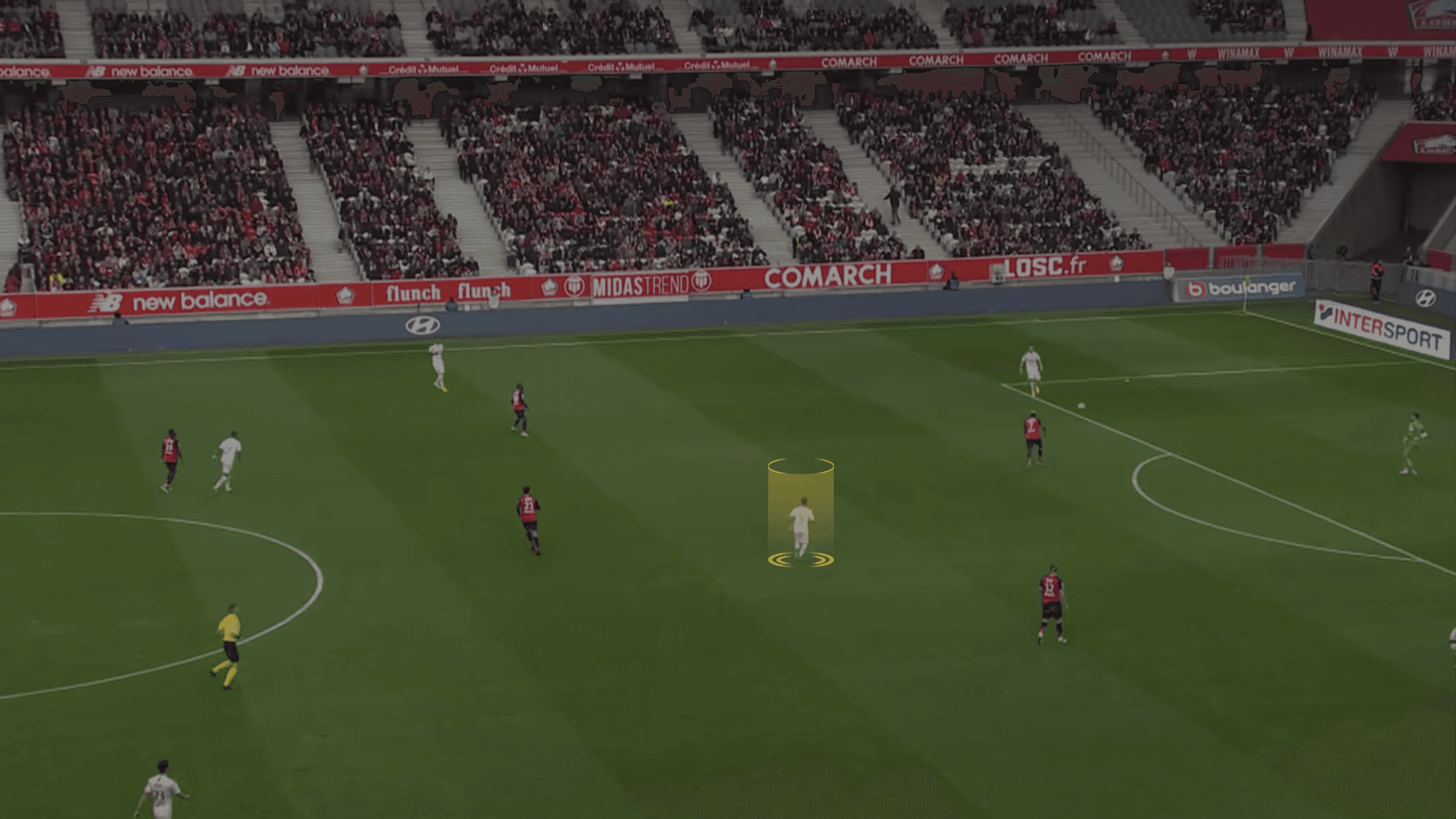
Player movement straight
New feature added after MVP
Performance coordination interface
A tool designed to help analysts streamline tagging during training, save time, and improve real-time communication with coaches, while reducing club expenses by replacing third-party tools. From a business perspective, these improvements accelerate adoption, drive early revenue, and strengthen the product's unique value proposition.
New feature added after MVP
Timeline validation
In football, there are many systems for categorizing plays. Kognia needed a common structure for their product and validated a new way to group, organize, and filter detected tactics within a complete match timeline, working closely with a group of professional analysts.
Discovery
We used card sorting, tree testing, and surveys to map analysts' mental models, then prototyped and conducted 14 moderated user tests to validate the proposed solution.
Ideation
Prepare and present findings from the discovery phase, evaluate the effectiveness of the tested solution, and propose adjustments or new solutions based on user needs.
Creation
Design the final solution in high fidelity for implementation, including interactions, UI states, and edge cases.
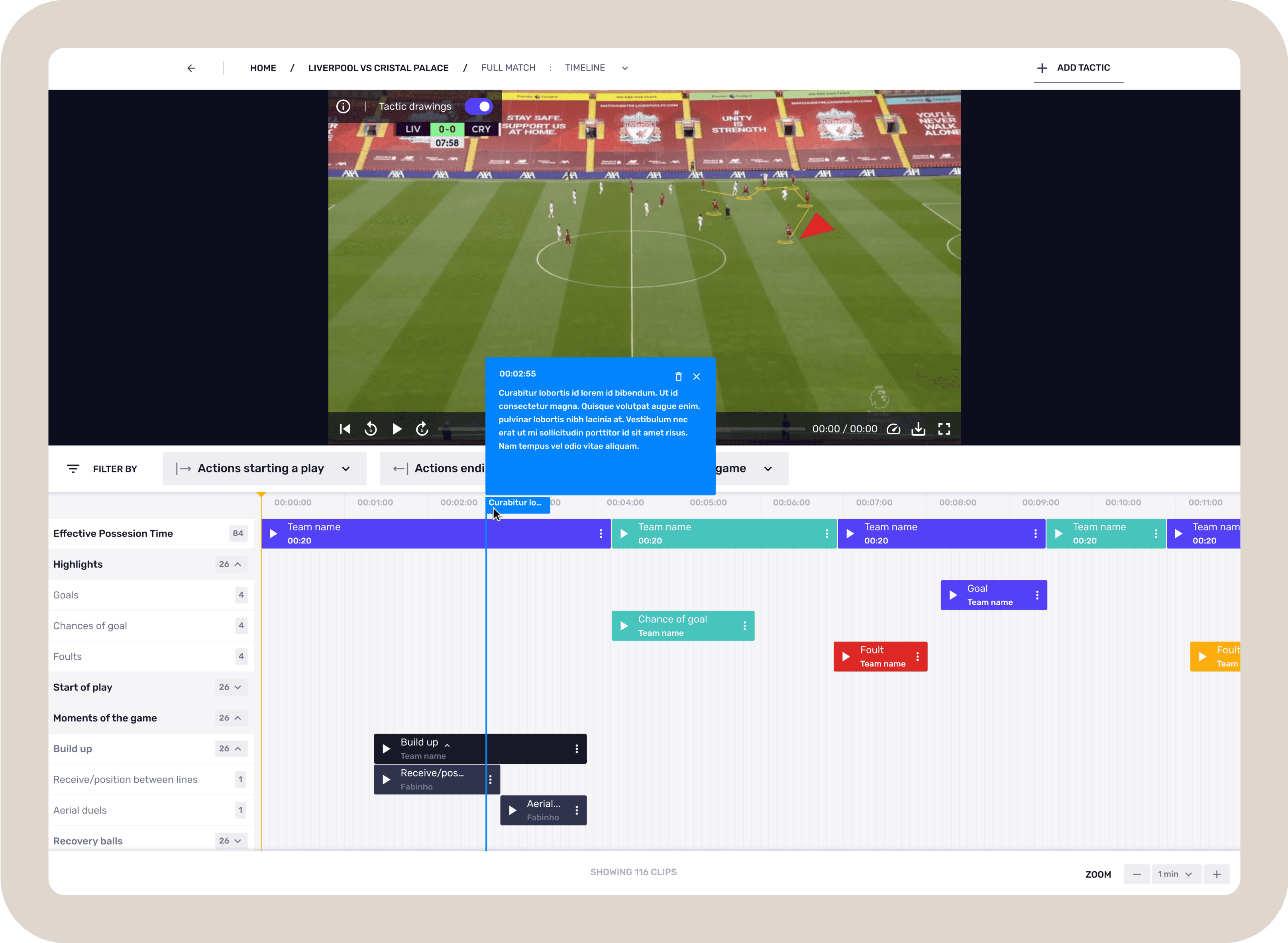
This is how a game or training session appears within the video details view. Although not part of Kognia's initial vision, research revealed that earning analyst trust was essential—and the best way to achieve it was by providing the source of truth behind every detected tactic. Another key reason for introducing this feature was to reduce the learning curve, making the new product feel more familiar compared to the tools analysts were already using.